Real robots. Real data. Real constraints.
Robotics research and practical systems at ko-br, including perception, sensing, robot data, and simulation.
 KO-BR / ROBOT DATA AND HARDWARE IN PRACTICE
Good robot learning starts with data you can trust.
RGB-D acquisition, camera debugging, encoder wiring and simulation experiments.
The physical world is very good at finding assumptions.
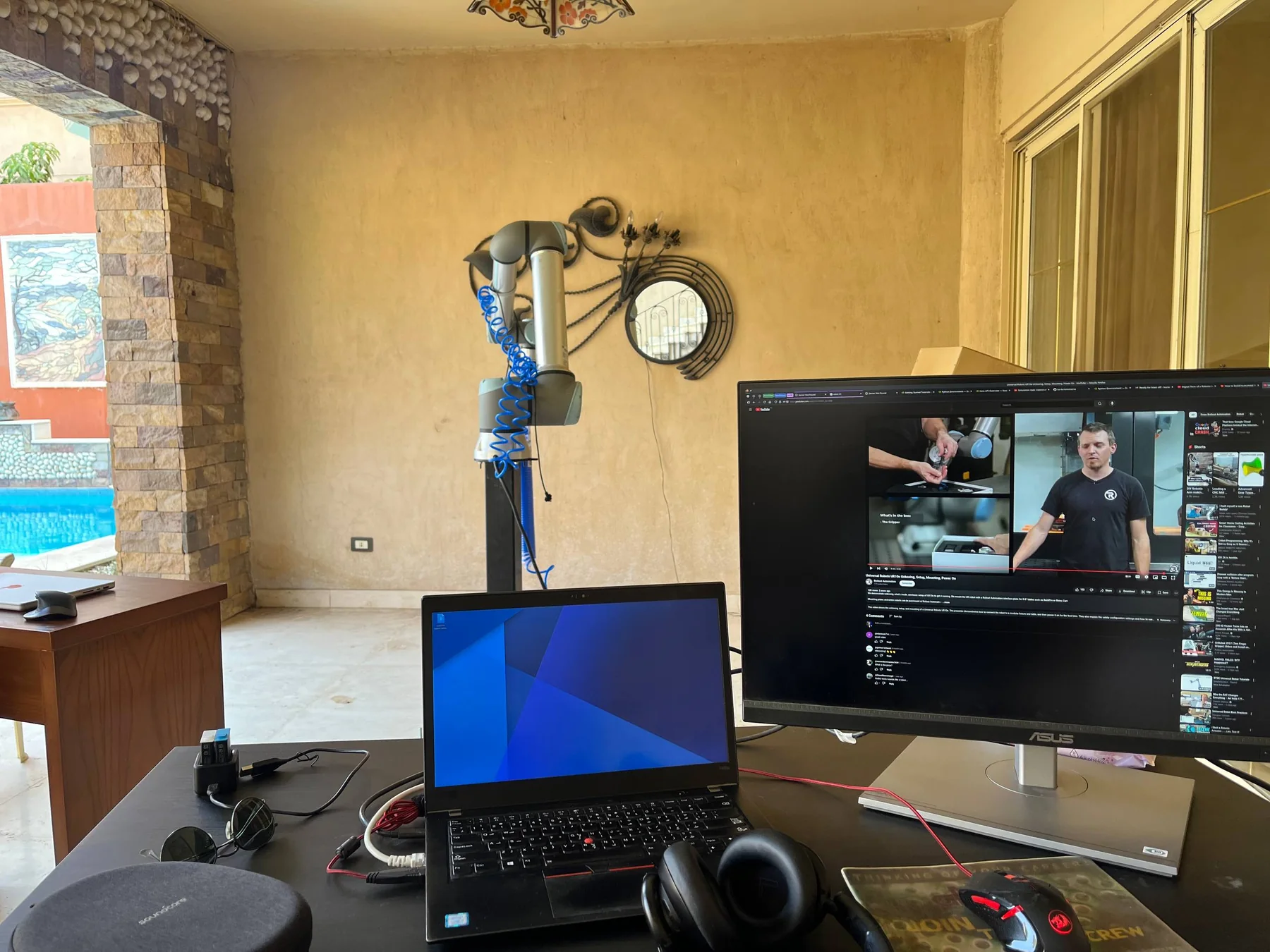
At ko-br, a small robotics startup, I get to move between very different jobs. Some days I'm figuring out why a camera stream is dropping frames; other days I'm wiring a lead arm, looking into a robot-learning paper, or testing a digital twin in Isaac Sim. I like that range.
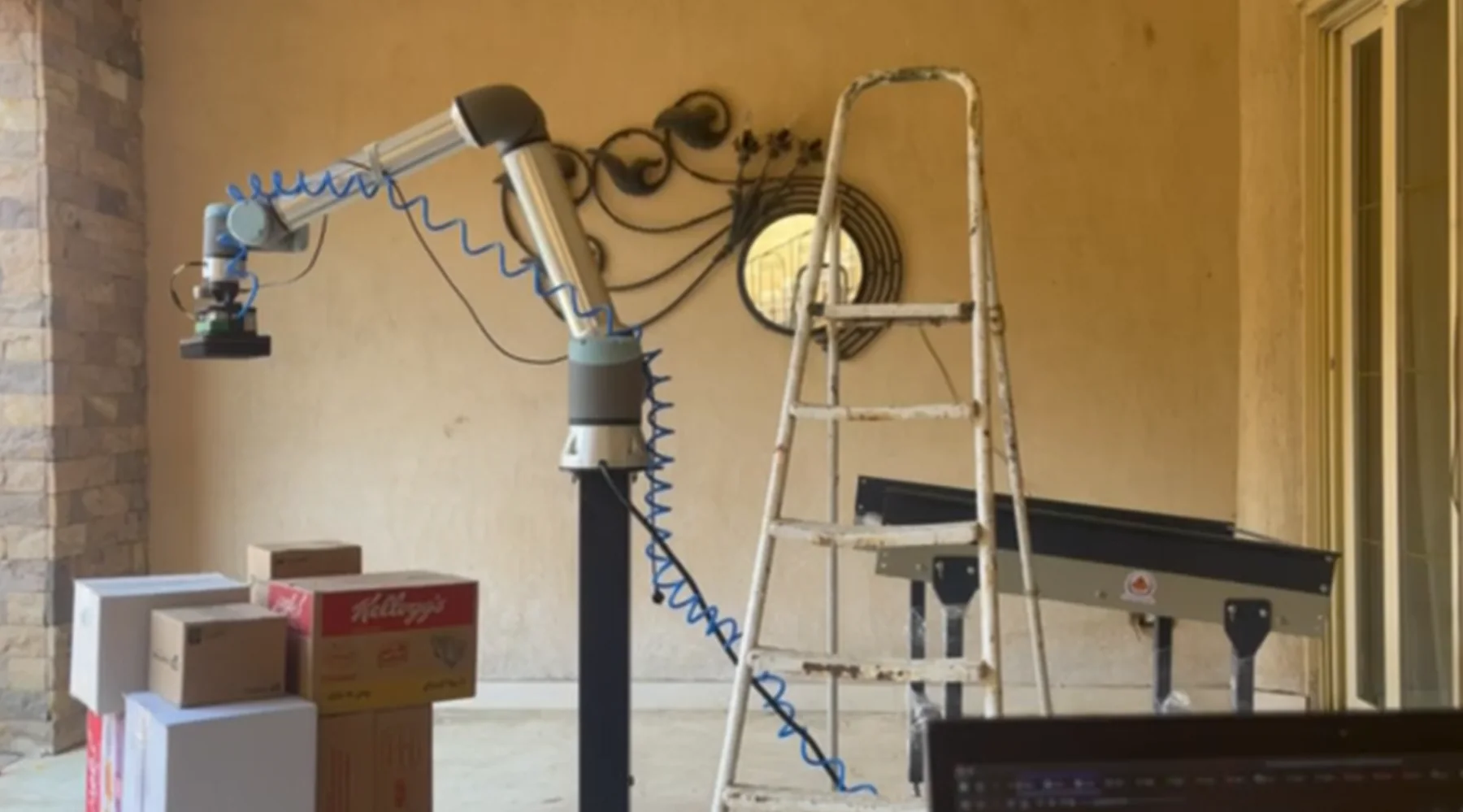
With UR10e arms and multiple Intel RealSense D435i cameras, small details matter: USB 2 versus 3.2, dropped frames, depth noise, calibration and cables that look fine until you start recording. Getting a stream to run is one thing; getting consistent data from it is the real work.
From soldering to simulation.
I've soldered and wired encoders for a lead arm designed to capture demonstrations, then switched contexts to NVIDIA Isaac Sim and digital-twin experiments with our UR10e. Those are very different tools, but they're connected by the same question: how do we get useful behaviour from real-world robot data?
I'm also studying robot-learning approaches such as Physical Intelligence's π₀. That work is research and experimentation for now, not a claim that I've trained a production robot policy.
Another view from Universal Robots.
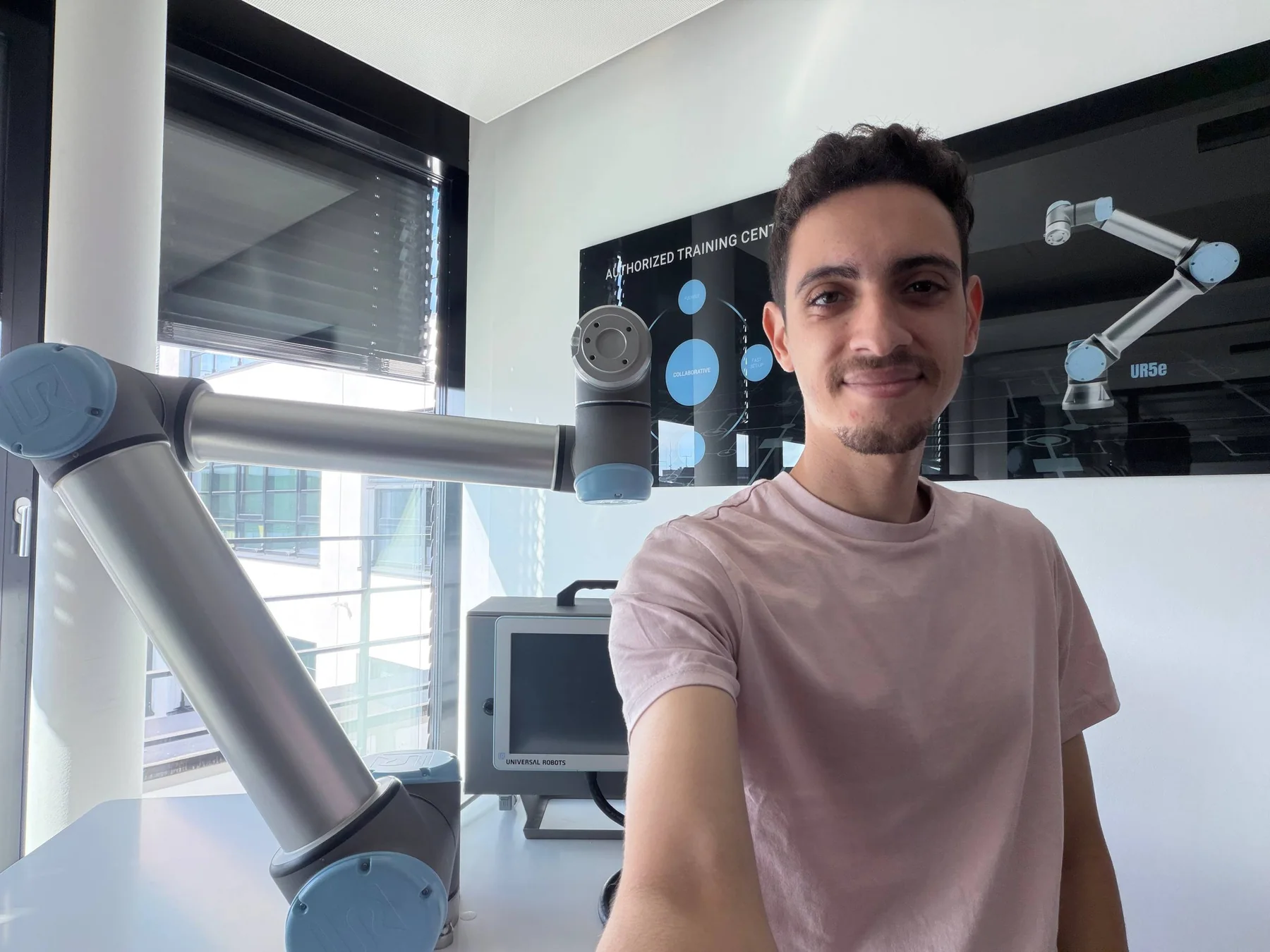
I joined Universal Robots in Munich in August 2026. It's a different perspective from startup R&D, and I'm learning a lot from working closer to industrial robotics. Together, these experiences are pulling me further toward embodied AI—the meeting point of sensing, learning and action.
Technical threads
- Robot-mounted RGB-D sensing, camera configurations and depth-quality evaluation.
- Encoder integration, lead-arm hardware and demonstration data.
- ROS/Webots navigation experiments with LiDAR and depth sensing.
- Exploration of simulation-to-real workflows and robot-learning architectures.