Engineering for the air and the water.
Building control, perception and operating software for fixed-wing UAVs and underwater vehicles.
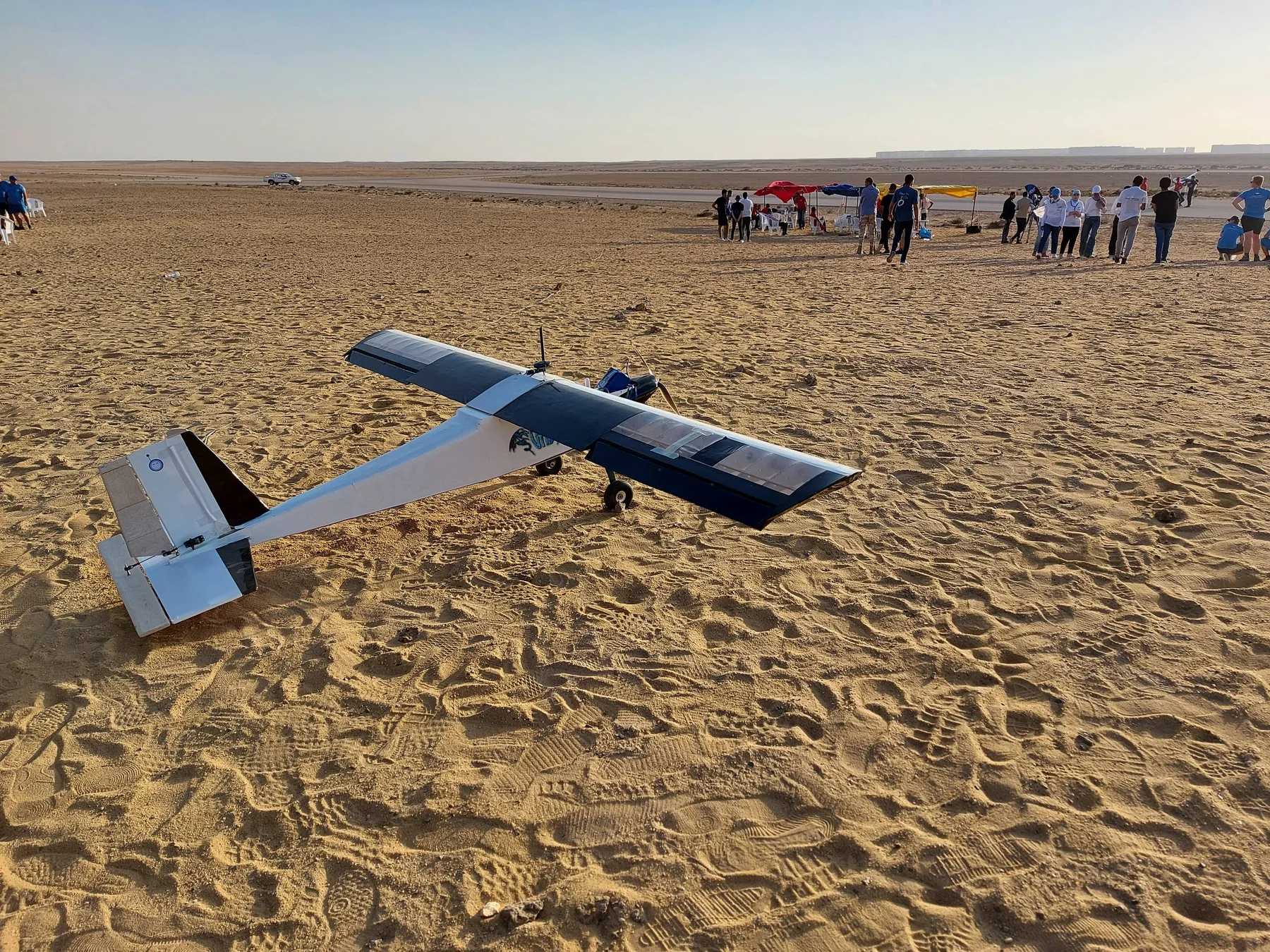 FIXED-WING UAV / ROBEN FIELD TESTS
Vision, control and communication had to work on actual competition vehicles.
Software architecture, hands-on implementation and technical leadership within the team.
Three meters of wingspan and a competition deadline.
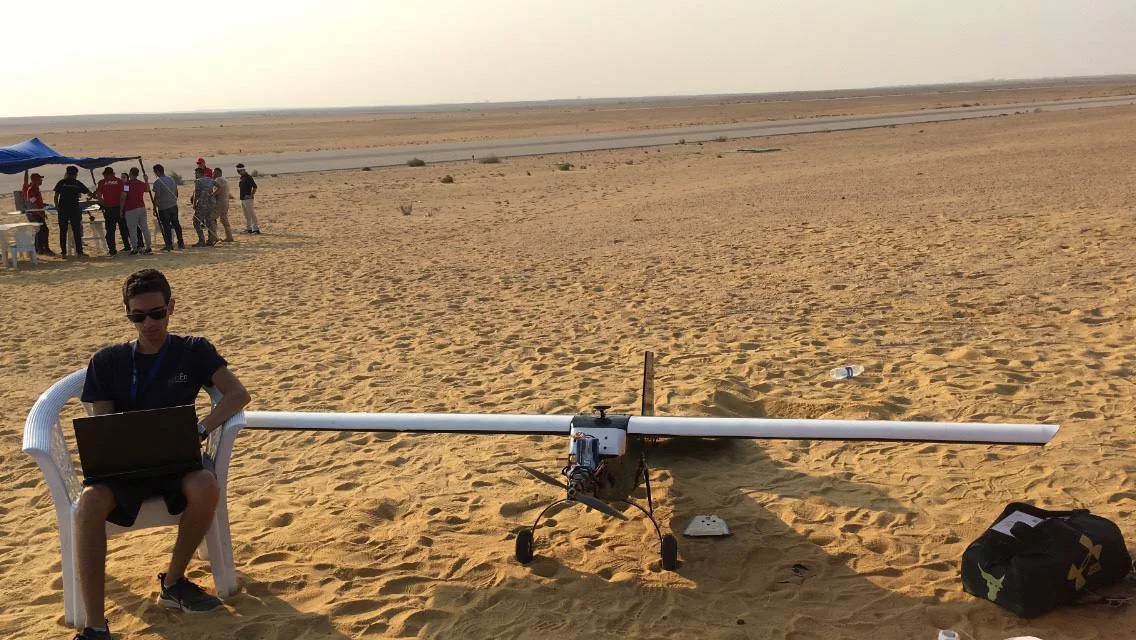
At RobEn we entered a fixed-wing aircraft with roughly a three-metre wingspan into the Military Technical College's UAV competition. My team was responsible for the software side: onboard vision challenges, communication and making algorithms work with the aircraft we actually had—not a perfect simulation.
I worked on the architecture and implementation myself, but a big part of leading the team was helping newer members become independent. We worked closely with the mechanical and electrical teams, usually while preparing for the next field test.
Then we took the same problem underwater.
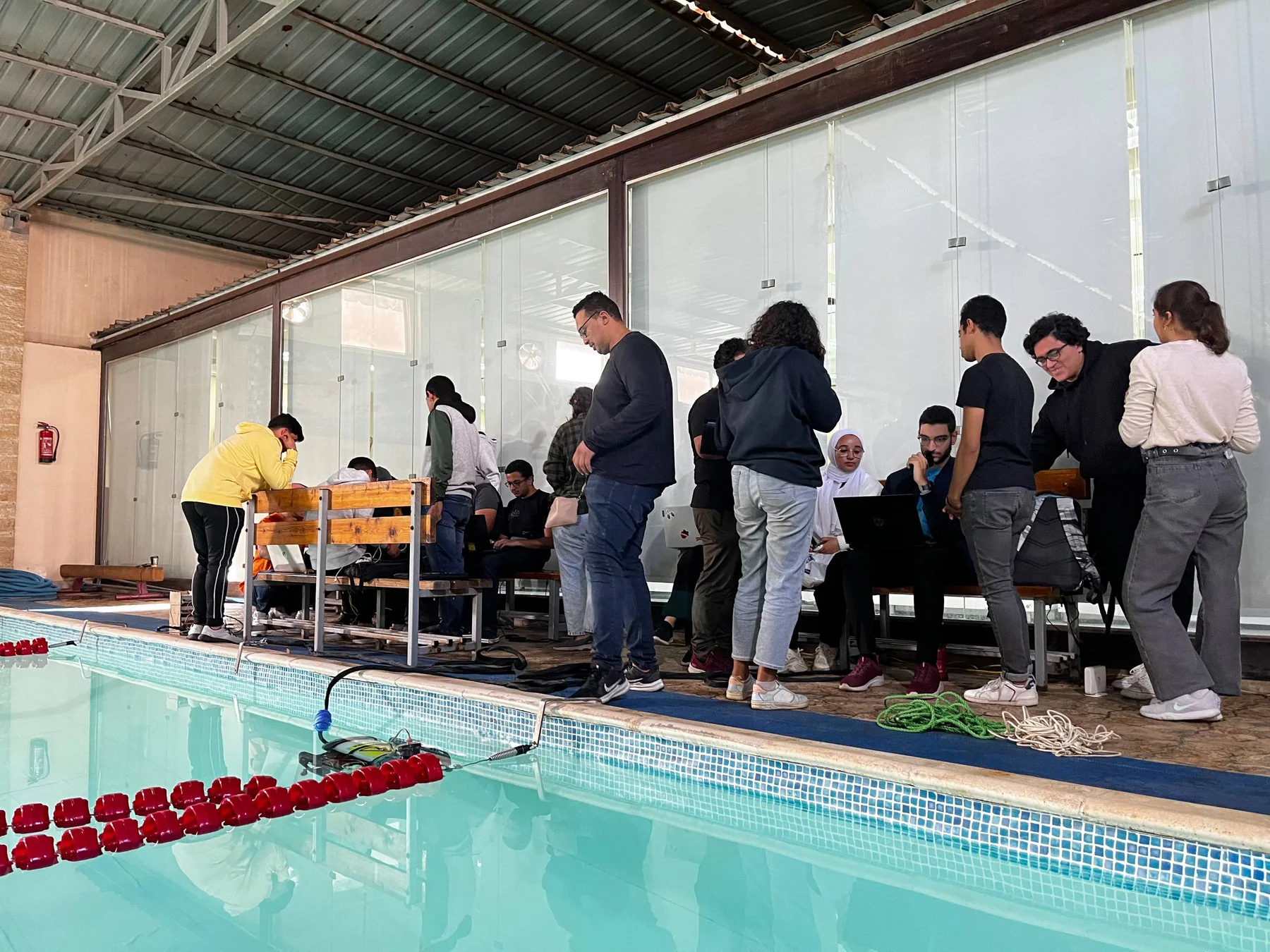
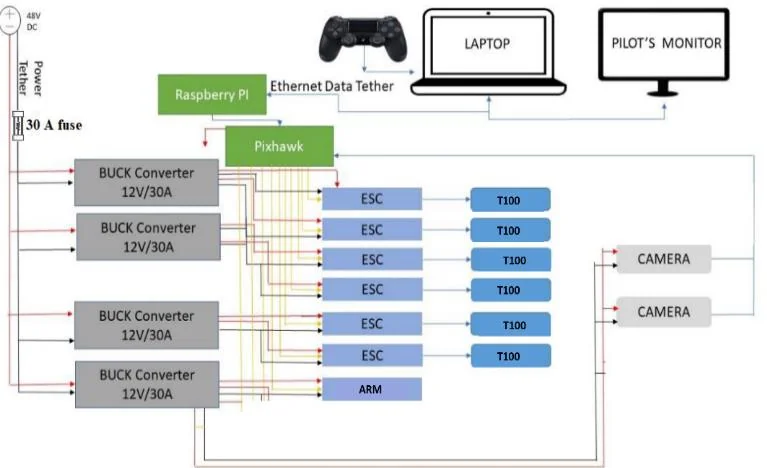
Our underwater robots had a different set of constraints: thrusters, tethered communication, cameras, manipulation hardware and visibility that changed constantly. The ROV/AUV paper documents a six-thruster prototype and the software behind its control, streaming and vision workflows, using GStreamer, OpenCV and a local network.
One part I still like pointing people to is rovlib, a Python package I published, documented and maintained for interacting with an ROV. Packaging the code for other people to use felt like an important step beyond getting it working for one competition.
Leading without becoming a bottleneck.
Over almost four years I led around 40 engineers across software, AI, DevOps and security. We competed in MATE ROV, MCT UAV, ECPC and other challenges; I taught new members and built a Django club-management platform so useful processes didn't disappear after graduation. I've kept mentoring the team since leaving university.
These years shaped how I think about engineering: a system isn't truly well-designed unless other people can understand it, work on it and make it better.