Making surgical skill measurable.
A published research collaboration using computer vision to quantify cardiothoracic surgical suturing technique.
 JOURNAL OF SURGICAL EDUCATION / 2026
Suturing skill is difficult to assess consistently without expert review.
Computer vision research and engineering as a co-author on the medical study.
When an expert can see the difference, can a camera?
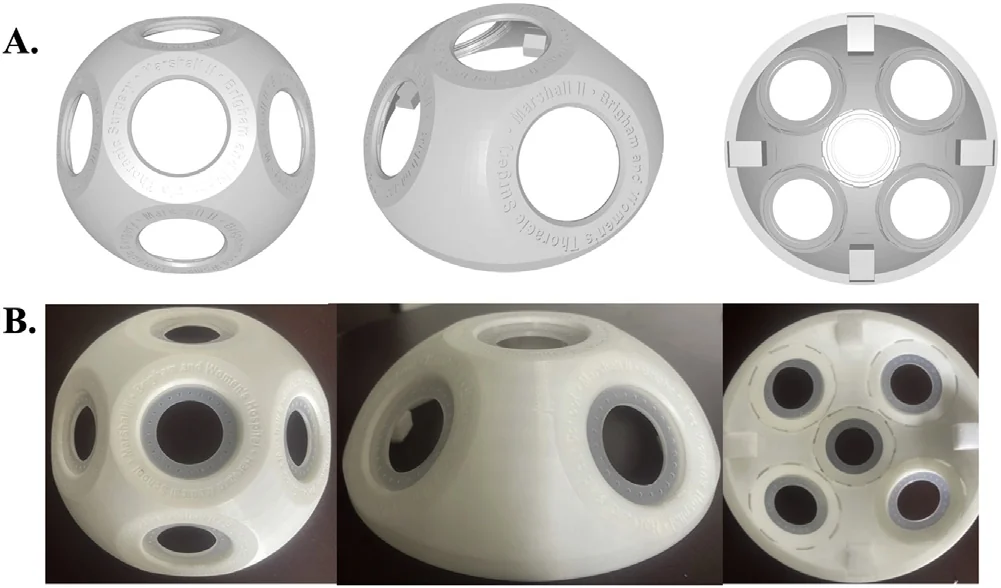
Surgical training relies heavily on expert feedback, but small differences in movement are hard to measure consistently by eye. Our team wanted to see whether video could capture those differences while surgeons practiced on a purpose-built 3D suturing simulator.
Through Gravitate AI, I worked on the computer vision analysis and co-authored the paper with an interdisciplinary team that included clinicians from Brigham and Women's Hospital and Harvard Medical School. It was a chance to work on a problem where better measurement might genuinely help people teach and learn.
From video frames to measurable technique.
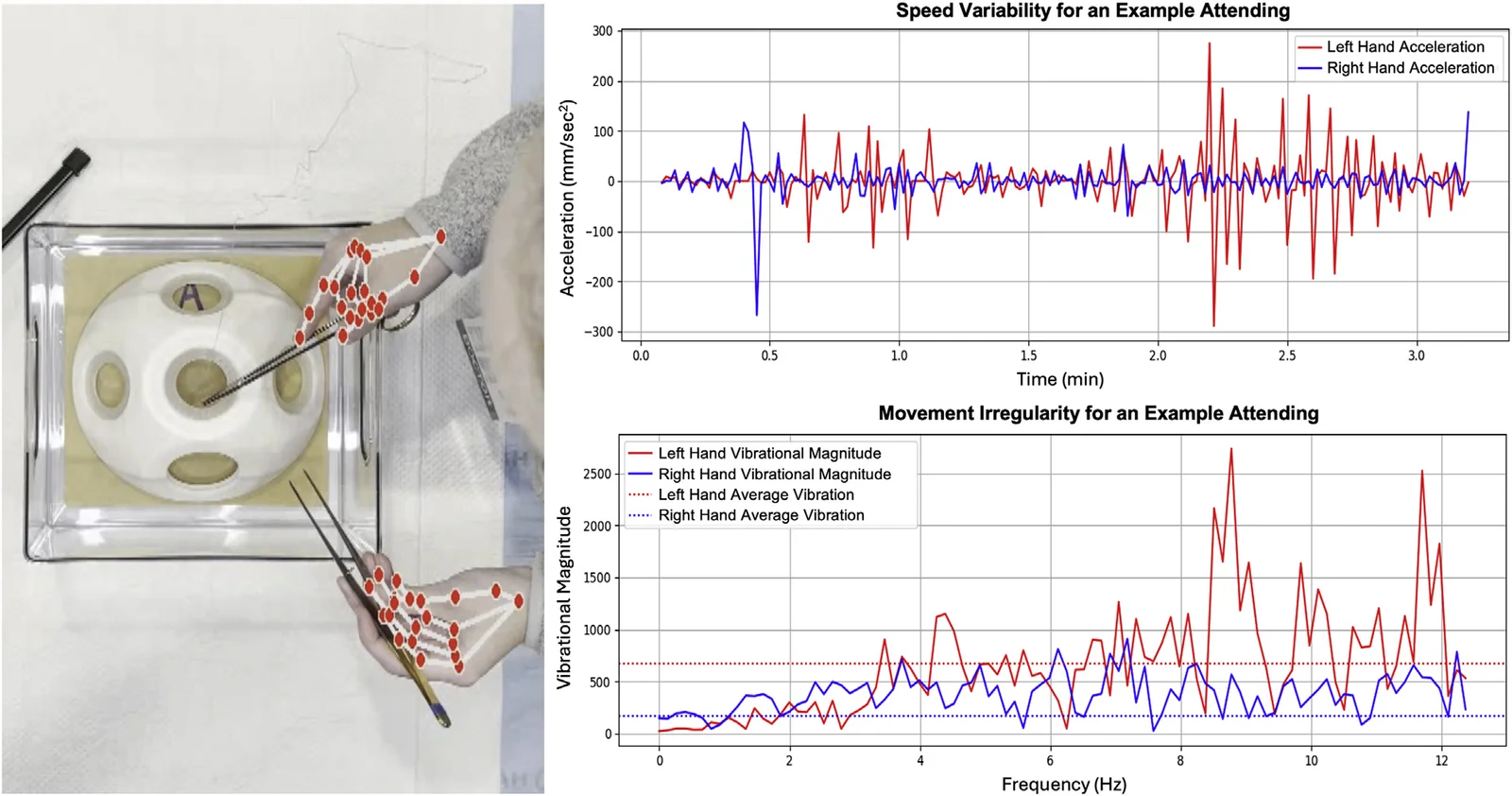
We used MediaPipe hand landmarks, YOLOX-based tool and hand detection, and temporal segmentation to separate actions such as needle loading and stitching. From the resulting trajectories, the study measured timing, path length, acceleration variation and movement irregularity.
We also analysed the finished stitches for placement and uniformity. Together, the motion and image metrics made it possible to compare technique in more detail than simply timing the task.
What the measurements showed.
The study included 10 attending cardiac surgeons and 10 trainees. The attendings finished a ring in 252 seconds on average, versus 312 for the trainees, and showed shorter motion paths and smoother movement. The important finding was that these differences could be measured consistently in the recorded tasks.
Publication
Wang, S. X., et al., including Karim Kohel. “Slow Is Smooth, Smooth Is Fast”: Artificial Intelligence-Driven Suturing Simulation for Cardiothoracic Surgical Training. Journal of Surgical Education, 2026.